
The Committee of the Regions cooperates with local and regional authorities outside the EU to forge partnerships and share knowledge and good practices across borders. It has set up several international forums such as the CoR-UK Contact Group, the Euro-Mediterranean Regional and Local Assembly (ARLEM) and the Conference of the Regional and Local Authorities for the Eastern Partnership (CORLEAP). The CoR has also established joint consultative committees and working groups to promote political dialogue with local and regional authorities in accession countries.
CoR-UK Contact Group
In order to ensure continuing political cooperation with representatives of UK local government and devolved parliaments and assemblies following the UK's withdrawal from the EU, in its meeting of 12 February 2020 the Bureau approved the creation of a CoR-UK Contact Group. The CoR's Bureau established a Contact Group for relations with representatives of UK local government and devolved administrations to ensure that political dialogue with these representatives continues after the UK's withdrawal from the EU. Moreover, the Contact Group's purpose is mainly to:
- act as a forum for continuing dialogue and political partnership between EU local and regional authorities and UK local government and devolved parliaments and assemblies, and to exchange know-how, in particular on cross-border issues;
- provide local and regional authorities (LRAs) with the opportunity to discuss problems or opportunities regarding the relationship between EU LRAs and UK local government and devolved parliaments and assemblies arising from the UK's withdrawal from the EU;
- give EU LRAs and UK local government and devolved parliaments and assemblies a means of discussing EU legislation and possible changes to EU legislation currently applicable in the UK where it would affect them even after the UK's departure from the EU.
Taking into account the overall aim to provide a political forum for engagement at the subnational level and to mitigate the territorial impact of the UK's withdrawal from the EU, the EPP-CoR Group will push for further debate and discussions on:
- the development of cross-border and inter-regional cooperation in areas such as education and research, transport, tourism and culture.
- an organised awareness campaign on the consequences of the EU-UK Trade and Cooperation Agreement (TCA) for local and regional authorities, whilst highlighting the opportunities to enhance cooperation between both sides;
- following the implementation of the TCA, particularly in areas that directly affect the competencies of local and regional authorities;
- cooperation between EU and UK cities and regions in relevant international fora on issues of global concern, such as environment, energy and international trade. Here, opportunities and challenges can be identified and followed-up at a more decentralised level.
EPP-CoR EU-UK Contact Group Members:
- Jimmy McClearn (IE), Local Councillor, Galway County Council
- Noel Formosa (MT), Mayor of San Lawrenz
- Pehr Ganfalk (SE), Member of Solna Municipal Council
- Emma Blain (IE), Dublin City Councillor
ARLEM
The Euro-Mediterranean Regional and Local Assembly (ARLEM) is a permanent, joint assembly which represents the local and regional dimension in the Union for the Mediterranean (UfM).
ARLEM brings together 80 members and 2 observers from the EU and its Mediterranean partner countries, as well as an equal number of alternates. Members and alternates are representatives of regions and local bodies and hold a regional or local authority mandate.
ARLEM has observer status in the UfM and participates regularly in Senior Officials Meetings.
It also brings the territorial dimension of projects selected by the Secretariat-General of the UfM and ensures the exchange of best practices.
The co-president from the EU is the CoR president-in-office. The 2025-2027 ARLEM co-presidents are Kata Tüttő, CoR president and Samir Chibani, Governor of the Wilaya of Oran, Algeria.
The ARLEM Bureau defines the Assembly’s strategy and range of activities.
Within the Commission for Sustainable Territorial Development, ARLEM rapporteurs elaborate thematic reports on topics referring to the fields of:
- decentralisation
- urban and territorial development
- cultural cooperation
- the information society
- migration and integration
- small and medium-sized enterprises
- trade
- sustainable development
- water management
- waste management
- energy, particularly solar energy
- transport
- agriculture
- tourism
EPP-CoR ARLEM Members:
- Juan Manuel Moreno Bonilla (ES), President of the Regional Government of Andalusia, CoR First Vice-President
- Nikolaos Chardalias (EL), Regional Governor of Attica, EPP-CoR First Vice-President
- Franck Proust (FR), Municipal Councillor, Nîmes
- Roberto Pella (IT), Mayor of Valdengo
- Eleni Loucaidou (CY), Municipal Councillor, Lefkosia
- Nikola Dobroslavić (HR), Prefect of the Dubrovnik-Neretva County
- Adrian Teban (RO), Mayor of Cugir
- Olgierd Geblewicz (PL), President of the West Pomerania Region
- Natalie Silva (LU), Municipal Councillor, Larochette
- Anthony Chircop (MT), President of the Eastern Region
- Birgitta Sacrédeus (SE), County Councillor, Dalarna Region
- Georgios Chatzimarkos (EL), Governor of the South Aegean Region
- Huguette Zeller (FR), Regional Councillor of the Region of Grand Est
- Thibaut Guignard (FR), Municipal Councillor, Ploeuc-l’Hermitage
- Jelena Drenjanin (SE), Member of Huddinge Municipal Council
- Jimmy McClearn (IE), Local Councillor, Galway County Council
CORLEAP
The Conference of Regional and Local Authorities for the Eastern Partnership, also known as CORLEAP, is the political forum of local and regional authorities from the European Union and the Eastern Partnership countries. CORLEAP is the only EU platform that offers an opportunity to discuss the contribution by cities and regions in the development of the Eastern Partnership. It functions as a territorial cooperation platform, where Local and regional associations from the partner states are contact points for CORLEAP in their countries, while the CoR is the natural contact point for the EU institutions. This enables CORLEAP to collect and share information relevant to the local and regional dimension of the Eastern Partnership.
CORLEAP consists of 33 regional and local politicians: 18 members of the CoR and 15 representatives from the five Eastern partner countries – Armenia, Azerbaijan, Georgia, Moldova and Ukraine. The body is co-chaired by the President of the Committee of the Regions and a representative from the partner countries whom is elected by CORLEAP members each year. The 2025-27 CORLEAP co-presidents are Kata Tüttő, CoR president and Emin Yeritsyan, Councillor of the Community of Parakar.
Objectives
CORLEAP aims to:
- Coordinate the representation of the local and regional authorities within the Eastern Partnership;
- complement and support the effort by the EU institutions and other participating stakeholders in delivering the European Neighbourhood Policy;
- spread the concepts that will bring partner countries closer to the EU and foster the internal reform and capacity building at the local and regional level.
EPP-CoR CORLEAP Members:
- Mathieu Cuip (FR), Regional Councillor, Île-de-France
- Valdas Benkunskas (LT), Mayor of Vilnius
- Radim Sršeň (CZ), Municipal Councillor, Dolní Studénky
- Csaba Borboly (RO), Vice-president of Harghita County Council
- Mihkel Juhkami (EE), Municipal Councillor, Rakvere
- Aleksandra Dulkiewicz (PL), Mayor of Gdańsk
Joint Consultative Committees and Working Groups currently in the CoR
Institutional context
The CoR’s official position on enlargement is primarily prepared by the CIVEX commission and adopted by the Plenary Assembly, through opinions on the European Commission’s enlargement package. In this context, the Joint Consultative Committees (JCCs) and Working Groups (WGs) play an active supporting role in contributing to the work of the Bureau, of the CIVEX members and of its Rapporteurs by informing on the results of the debates during the meetings with the partner countries.
Working Groups (WGs) are composed only of members of the CoR. They are created directly by a decision of the CoR Bureau in accordance with the CoR Rules of Procedure . The participation of local and regional representatives from the partner countries in meetings of the Working Groups varies according to the topics discussed and the place of the meeting. The Working Groups usually constitute a contact point with the LRAs of the partner countries and are used as a tool to deepen specific bilateral/multilateral issues.
Joint Consultative Committees (JCCs) are created between the Committee of the Regions and local and regional representatives of the candidate countries for EU accession following a request from the government of the partner country concerned and on the basis of the provisions set down in the Stabilisation and Association Agreement (SAA) or in an official declaration of the Stabilisation and Association Council between the Council of the European Union and the candidate country.
They are composed of an equal number of CoR members (and replacement members) and local and regional representatives from the partner country. JCCs are co-chaired by a CoR member and a member from the partner country, and decisions are taken jointly. Furthermore, the functioning of the JCCs is regulated by the “Rules of Procedures” adopted within each JCC.
Given the stability of their membership, JCCs allow for a consistent and stable cooperation with local and regional authorities of the partner country, offering increased co-ownership, and ensuring a more proactive role for the representatives of the partner country. The JCCs have an important role in promoting dialogue and cooperation between LRAs in the EU and in the candidate countries.
JCC Montenegro
Joint Consultative Committees and Working Groups currently in the CoR
The Joint Consultative Committee between the CoR and Montenegro was set up in 2011 with the approval of the CoR Bureau and a decision of the EU-Montenegro Stabilisation and Association Council.
The purpose of the JCC Montenegro is to promote dialogue and cooperation with local and regional authorities in Montenegro and to support them on their EU integration path. Meetings are held twice a year, once in Brussels in the framework of the Enlargement Day of the CoR and once in Montenegro.
Objectives:
- Providing a venue for the local and regional authorities from the EU and Montenegrin municipalities to contribute to Montenegro’s EU accession process, particularly through assisting in the proper implementation of the EU acquis in Montenegro at the local level;
- Promoting dialogue and cooperation on relevant issues of mutual interest between the LRAs from the EU and Montenegrin municipalities, including the exchange of examples of best practice, and facilitating their contacts with EU institutions and bodies;
- Monitoring the enlargement process and encouraging cross-border cooperation, promoting decentralisation and local self-government while upholding EU values;
- Preparing Montenegro’s local representatives for participation in the CoR after the country’s accession to the EU.
Topics addressed by the JCC:
- Local democracy, good governance, rule of law and fundamental rights;
- Energy security and affordability, protection of the environment and climate action; Local economic development;
- Local economic development and competitiveness;
- Demographic and social issues, including the strengthening of communities’ resilience;
- Cross-border cooperation;
- Sustainable Development Goals (SDGs)
EPP-CoR Members:
- Nikola Dobroslavić (HR), Prefect of the Dubrovnik-Neretva County, Co-Chair
- Gregor Macedoni (SI), Mayor of Novo Mesto
North Macedonia
Joint Consultative Committee between the CoR and North Macedonia
The Joint Consultative Committee between the CoR and North Macedonia was set up in 2008 with the approval of the CoR Bureau and a decision of the EU-North Macedonia Stabilisation and Association Council.
The purpose of the JCC North Macedonia is to promote dialogue and cooperation with local and regional authorities in North Macedonia and to support them on their EU integration path. Meetings are held twice a year, once in Brussels in the framework of the Enlargement Day of the CoR and once in North Macedonia.
Objectives:
- Assisting in the proper implementation of the EU acquis at local and regional level;
- Providing a venue for the LRAs to contribute to the enlargement process within the context of the Stabilisation and Association Council;
- Promoting dialogue and cooperation on relevant issues of mutual interest between the local and regional authorities (LRAs) from the EU and North Macedonia;
- Providing a consistent framework for sustainable cooperation between the CoR and North Macedonia’s local authorities, including the exchange of examples of best practice, and facilitating their contacts with EU institutions and bodies;
- Promoting European values at the local level, such as democracy in general and local democracy in particular; rule of law; good governance, with a special focus on the fight against corruption; respect for human rights and freedoms and equality, and a sustainable market economy;
- Preparing local representatives for participation in the CoR after accession.
Topics addressed by the JCC:
- Local democracy, good governance, rule of law and fundamental rights;
- Energy security and affordability, protection of the environment and climate action; Local economic development;
- Local economic development and competitiveness;
- Demographic and social issues, including the strengthening of communities’ resilience;
- Cross-border cooperation;
- Sustainable Development Goals (SDGs)
EPP-CoR Members:
- Alberto Cirio (IT), President of the Piedmont Region
- Bruno Hranić (HR), Mayor of Vidovec
- Pavel Gudzherov (BG), Mayor of Rakovski
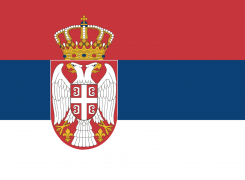
JCC Serbia
Joint Consultative Committee with Serbia
The Joint Consultative Committee between the CoR and Serbia was set up in 2014 with the approval of the CoR Bureau and a decision of the EU-Serbia Stabilisation and Association Council.
The purpose of the JCC Serbia is to promote dialogue and cooperation with local and regional authorities in Serbia and to support them on their EU integration path. Meetings are held twice a year, once in Brussels in the framework of the Enlargement Day of the CoR and once in Serbia.
Objectives:
- Assisting in the proper implementation of the EU acquis at local and regional level;
- Providing a venue for the LRAs to contribute to the enlargement process within the context of the Stabilisation and Association Council;
- Promoting dialogue and cooperation on relevant issues of mutual interest between the local and regional authorities (LRAs) from the EU and Serbia;
- Providing a consistent framework for sustainable cooperation between the CoR and Serbia's local authorities, including the exchange of examples of best practice, and facilitating their contacts with EU institutions and bodies;
- Promoting European values at the local level, such as democracy in general and local democracy in particular; rule of law; good governance, with a special focus on the fight against corruption; respect for human rights and freedoms and equality, and a sustainable market economy;
- Preparing local representatives for participation in the CoR after accession.
Topics addressed by the JCC:
- Local democracy, good governance, rule of law and fundamental rights;
- Energy security and affordability, protection of the environment and climate action; Local economic development;
- Local economic development and competitiveness;
- Demographic and social issues, including the strengthening of communities’ resilience;
- Cross-border cooperation;
- Sustainable Development Goals (SDGs)
EPP-CoR Members:
- Danijel Marušić (HR), Prefect of the Brod-Posavina County
- Marie-Hélène Herry (FR), Municipal Councillor Saint-Malo-de-Beignon
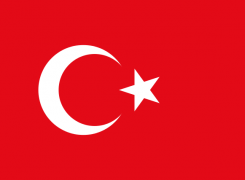
WG Turkey
Working group on Turkey
The CoR's Working Group on Relations with Türkiye was set up in 2006 with the approval of the CoR Bureau. Through this WG, the CoR aims to foster dialogue and cooperation with political representatives at the local and regional levels on various issues linked to the EU enlargement agenda and raises awareness about the role of local and regional authorities (LRAs) in the accession process.
Meetings are held twice a year, once in Brussels in the framework of the Enlargement Day of the CoR and once in Türkiye.
Objectives:
- Assisting in the proper implementation of the EU acquis at local and regional level;
- Providing a venue for the LRAs to contribute to the enlargement process within the context of the Stabilisation and Association Council;
- Promoting dialogue and cooperation on relevant issues of mutual interest between the local and regional authorities (LRAs) from the EU and Türkiye;
- Providing a consistent framework for sustainable cooperation between the CoR and Türkiye's local authorities, including the exchange of examples of best practice, and facilitating their contacts with EU institutions and bodies;
- Promoting European values at the local level, such as democracy in general and local democracy in particular; rule of law; good governance, with a special focus on the fight against corruption; respect for human rights and freedoms and equality, and a sustainable market economy;
- Preparing local representatives for participation in the CoR after accession.
Topics addressed by the WG:
- Local democracy, good governance, rule of law and fundamental rights;
- Energy security and affordability, protection of the environment and climate action; Local economic development;
- Local economic development and competitiveness;
- Demographic and social issues, including the strengthening of communities’ resilience;
- Cross-border cooperation;
- Sustainable Development Goals (SDGs)
EPP-CoR Members:
- Jelena Drenjanin, Member of Huddinge Municipal Council, Chair
- Mihkel Juhkami (EE), Municipal Councillor, Rakvere
- Ignatios Kaitezidis (EL), Mayor of Pilea-Hortiati
- Roberto Pella (IT), Mayor of Valdengo
JCC Albania
Joint Consultative Committee between the CoR and Albania
The Joint Consultative Committee between the CoR and Albania was set up in 2025 with the approval of the CoR Bureau and a decision of the EU-Albania Stabilisation and Association Council.
It is a newly-established JCC, whose purpose is to promote dialogue and cooperation with local and regional authorities in Albania and to support them on their EU integration path. Meetings are held twice a year, once in Brussels in the framework of the Enlargement Day of the CoR and once in Albania.
Objectives:
- Assisting in the proper implementation of the EU acquis at local and regional level;
- Providing a venue for the LRAs to contribute to the enlargement process within the context of the Stabilisation and Association Council;
- Promoting dialogue and cooperation on relevant issues of mutual interest between the local and regional authorities (LRAs) from the EU and Albania;
- Providing a consistent framework for sustainable cooperation between the CoR and Albania's local authorities, including the exchange of examples of best practice, and facilitating their contacts with EU institutions and bodies;
- Promoting European values at the local level, such as democracy in general and local democracy in particular; rule of law; good governance, with a special focus on the fight against corruption; respect for human rights and freedoms and equality, and a sustainable market economy;
- Preparing local representatives for participation in the CoR after accession.
Topics addressed by the JCC:
- Local democracy, good governance, rule of law and fundamental rights;
- Energy security and affordability, protection of the environment and climate action; Local economic development;
- Local economic development and competitiveness;
- Demographic and social issues, including the strengthening of communities’ resilience;
- Cross-border cooperation;
- Sustainable Development Goals (SDGs)
EPP-CoR Members:
- Roberto Pella (IT), Mayor of Valdengo
- Dimitrios Kafantaris (EL), Municipal Councillor, Pulou-Nestoros
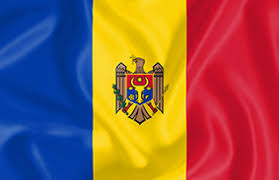
WG Moldova
CoR's Working Group on Moldova
The CoR's Working Group on Moldova was set up in 2025 with the approval of the CoR Bureau. Through this WG, the CoR aims to foster dialogue and cooperation with political representatives at the local and regional levels on various issues linked to the EU enlargement agenda and raises awareness about the role of local and regional authorities (LRAs) in the accession process.
Meetings are held twice a year, once in Brussels in the framework of the Enlargement Day of the CoR and once in Moldova.
Objectives:
- Assisting in the proper implementation of the EU acquis at local and regional level;
- Providing a venue for the LRAs to contribute to the enlargement process within the context of the Stabilisation and Association Council;
- Promoting dialogue and cooperation on relevant issues of mutual interest between the local and regional authorities (LRAs) from the EU and Moldova;
- Providing a consistent framework for sustainable cooperation between the CoR and Moldova's local authorities, including the exchange of examples of best practice, and facilitating their contacts with EU institutions and bodies;
- Promoting European values at the local level, such as democracy in general and local democracy in particular; rule of law; good governance, with a special focus on the fight against corruption; respect for human rights and freedoms and equality, and a sustainable market economy;
- Preparing local representatives for participation in the CoR after accession.
Topics addressed by the WG:
- Local democracy, good governance, rule of law and fundamental rights;
- Energy security and affordability, protection of the environment and climate action; Local economic development;
- Local economic development and competitiveness;
- Demographic and social issues, including the strengthening of communities’ resilience;
- Cross-border cooperation;
- Sustainable Development Goals (SDGs)
EPP-CoR Members:
- Siim Suursild (EE), Member of Pärnu City Council
- Marcin Kuchciński (PL), Marshal of the Warmińsko-Mazurskie Voivodeship
- Adrian Teban (RO), Mayor of Cugir
WG Bosnia and Herzegovina
CoR's Working Group on Bosnia and Herzegovina
The CoR's Working Group on Bosnia and Herzegovina was set up in 2025 with the approval of the CoR Bureau. It was created as a result of the former WG Western Balkans being split into specific WGs for each of the individual countries concerned. Through this WG, the CoR aims to foster dialogue and cooperation with political representatives at the local and regional levels on various issues linked to the EU enlargement agenda and raises awareness about the role of local and regional authorities (LRAs) in the accession process.
Meetings are held twice a year, once in Brussels in the framework of the Enlargement Day of the CoR and once in Bosnia and Herzegovina.
Objectives:
- Assisting in the proper implementation of the EU acquis at local and regional level;
- Providing a venue for the LRAs to contribute to the enlargement process within the context of the Stabilisation and Association Council;
- Promoting dialogue and cooperation on relevant issues of mutual interest between the local and regional authorities (LRAs) from the EU and Bosnia and Herzegovina;
- Providing a consistent framework for sustainable cooperation between the CoR and Bosnia and Herzegovina's local authorities, including the exchange of examples of best practice, and facilitating their contacts with EU institutions and bodies;
- Promoting European values at the local level, such as democracy in general and local democracy in particular; rule of law; good governance, with a special focus on the fight against corruption; respect for human rights and freedoms and equality, and a sustainable market economy;
- Preparing local representatives for participation in the CoR after accession.
Topics addressed by the WG:
- Local democracy, good governance, rule of law and fundamental rights;
- Energy security and affordability, protection of the environment and climate action; Local economic development;
- Local economic development and competitiveness;
- Demographic and social issues, including the strengthening of communities’ resilience;
- Cross-border cooperation;
- Sustainable Development Goals (SDGs)
EPP-CoR Members:
- Csaba Borboly (RO), Vice-president of Harghita County Council, Chair
- Natalie Silva (LU), Municipal Councillor, Larochette
- Igor Andrović (HR), Prefect of the Virovitica-Podravina County
- Radim Sršeň (CZ), Mayor of Dolní Studénky
WG Kosovo
CoR's Working Group on Kosovo
The CoR's Working Group on Kosovo was set up in 2025 with the approval of the CoR Bureau. It was created as a result of the former WG Western Balkans being split into specific WGs for each of the individual countries concerned. Through this WG, the CoR aims to foster dialogue and cooperation with political representatives at the local and regional levels on various issues linked to the EU enlargement agenda and raises awareness about the role of local and regional authorities (LRAs) in the accession process.
Meetings are held twice a year, once in Brussels in the framework of the Enlargement Day of the CoR and once in Kosovo.
Objectives:
- Assisting in the proper implementation of the EU acquis at local and regional level;
- Providing a venue for the LRAs to contribute to the enlargement process within the context of the Stabilisation and Association Council;
- Promoting dialogue and cooperation on relevant issues of mutual interest between the local and regional authorities (LRAs) from the EU and Kosovo;
- Providing a consistent framework for sustainable cooperation between the CoR and Kosovo's local authorities, including the exchange of examples of best practice, and facilitating their contacts with EU institutions and bodies;
- Promoting European values at the local level, such as democracy in general and local democracy in particular; rule of law; good governance, with a special focus on the fight against corruption; respect for human rights and freedoms and equality, and a sustainable market economy;
- Preparing local representatives for participation in the CoR after accession.
Topics addressed by the WG:
- Local democracy, good governance, rule of law and fundamental rights;
- Energy security and affordability, protection of the environment and climate action; Local economic development;
- Local economic development and competitiveness;
- Demographic and social issues, including the strengthening of communities’ resilience;
- Cross-border cooperation;
- Sustainable Development Goals (SDGs)
EPP-CoR Members:
- Adam Struzik (PL), Marshal of the Mazowieckie Voivodeship
- Arnoldas Abramavičius (LT), Councillor at Zarasai District Municipality Council
- Roman Línek (CZ), Member of the Regional Assembly of the Pardubice Region
WG Ukraine
CoR's Working Group on Ukraine
The CoR's Working Group on Ukraine was set up in 2015 (under the name 'Task Force on Ukraine') with the approval of the CoR Bureau. Through this WG, the CoR aims to foster dialogue and cooperation with political representatives at the local and regional levels on various issues linked to the EU enlargement agenda and raises awareness about the role of local and regional authorities (LRAs) in the accession process.
Meetings are held twice a year, once in Brussels in the framework of the Enlargement Day of the CoR and once in Ukraine (when possible due to the ongoing Russian war against Ukraine).
Objectives:
- Promoting dialogue and fostering cooperation on relevant issues of mutual interest between the Local and Regional Authorities (LRAs) of the EU and Ukraine;
- Monitoring the relevant EU enlargement reforms and assisting in the proper implementation of EU legislation at local and regional level in Ukraine;
- Providing a venue for the LRAs to contribute to the enlargement process within the context of the EU-Ukraine Association Council in the process of the implementation of the EU-Ukraine Association Agreement;
- Providing a consistent framework for sustainable cooperation between the CoR and Ukraine’s local and regional authorities, including the exchange of examples of best practice, and facilitate their contacts with EU institutions and other stakeholders;
- Promoting at the local level European values such as democracy in general and local democracy in particular; rule of law; good governance, with a special focus on the fight against corruption; respect for human rights and freedoms and equality, and a sustainable market economy;
- Discussing and fostering Ukrainian LRAs’ capacity building needs based on the EU’s principles of subsidiarity and multi-level governance;
- Preparing Ukrainian local and regional representatives in view of the establishment of a future CoR-Ukraine Joint Consultative Committee (JCC) and for their full membership participation in the CoR, following their country’s accession to the EU;
- Collaborating and coordinating with the CoR-organised European Alliance of Cities and Regions for the Reconstruction of Ukraine, to support Ukraine’s sustainable reconstruction and resilience, and the role of the LRAs in it;
- Monitoring and contributing to the CoR’s own 10-Point Support Package for Ukraine;
- Complementing multilateral activities within the Conference of Local and Regional Authorities for the Eastern Partnership (CORLEAP) by providing a framework for sustainable bilateral cooperation with Ukrainian local and regional authorities;
Topics addressed by the WG:
- Local democracy, good governance, rule of law and fundamental rights;
- Energy security and affordability, protection of the environment and climate action; Local economic development;
- Local economic development and competitiveness;
- Demographic and social issues, including the strengthening of communities’ resilience;
- Cross-border cooperation;
- Sustainable Development Goals (SDGs)
EPP-CoR Members:
- Valdas Benkunskas, Mayor of Vilnius
- Thibaud Guignard, Municipal Councillor of Ploeuc-l’Hermitage
- Aleksandra Dulkiewicz, Mayor of Gdańsk
- Thomas Schmidt, Member of the Saxon State Parliament
- Jesus Gamallo Aller, Director General for External Relations and Relations with the European Union, Regional Government of Galicia