Priorities

Local and regional authorities implement more than two thirds of EU regulation. They therefore have an essential role in developing future European policies through the principles of subsidiarity and proportionality. Learn more about our positions and priorities:

The EPP Network on Housing brings together EPP local and regional leaders committed to addressing Europe’s housing challenges through concrete, deliverable solutions.

web

Share

EPP-CoR Network on Housing

About the Network 

The EPP Network on Housing brings together EPP local and regional leaders committed to addressing Europe’s housing challenges through concrete, deliverable solutions. 

The Network aims to map local and regional housing initiatives, promote the exchange of best practices, and strengthen the contribution of cities and regions to the European housing agenda. By connecting grassroots experience with EU-level policymaking, the Network reinforces the EPP’s role as the political family closest to citizens and territories. 


Our Events 

The Network was officially launched at the European Committee of the Regions, bringing together EPP-CoR members, EU Local Councillors, and Young Elected Politicians. The session focused on sharing concrete local solutions to the housing crisis, particularly for young people, affordable housing supply, renovation, and the reuse of existing buildings. The event marked an important step in building a strong community of EPP mayors and regional leaders and connecting local experience with the future EU housing agenda. 
👉 https://shorturl.at/nfx41  

Hosted in Badalona, this external EPP-CoR meeting gathered policymakers, housing experts, and local leaders to discuss challenges in housing markets, urban planning, and access for younger generations. The discussions highlighted innovative approaches, investment needs, and opportunities for stronger European cooperation, while showcasing practical examples from across European cities and regions. - 👉  https://shorturl.at/sXAda 

This local dialogue explored the growing difficulties young people face in accessing housing, alongside broader market pressures such as rising prices, limited supply, and legal uncertainty. Regional and local representatives presented Galicia’s housing strategy and discussed policy responses aimed at improving affordability and supporting youth emancipation, positioning the region as a reference for housing action. - 
👉 https://shorturl.at/lRr4L 


Key Documents 

This section will gather major political and policy contributions of the Network, including declarations, reports, and strategic papers. 

Available documents: 👉 Badalona Declaration 

Join the EPP Network on Housing 

Local and regional authorities are on the frontline of Europe’s housing challenge. 

If you are implementing housing policies or projects in your territory, we invite you to contribute to the Network. 

By joining, you will help map local action, share best practices, and strengthen the role of EPP-led territories in shaping Europe’s housing future. 

Complete the survey and join the Network here 👉 https://shorturl.at/0f0HY 


Members of the European Committee of the Regions are calling for a Green Deal that delivers at grassroots level, while striving for action at global level.

Share

Green Deal

Members of the European Committee of the Regions are calling for a Green Deal that delivers at grassroots level, while striving for action at global level. We need targeted actions and appropriate funding to support local and regional authorities in their climate efforts.

Mainstream sustainability, work with local & regional governments

Clear plan: A Green Deal agenda with measurable objectives and targeted actions and funding, prepared together with cities and regions in the framework of implementing the UN’s SDGs. Progress should be monitored through the EU’s State of the Union process.

Launch Multilevel Climate and Energy Dialogues: involve local and regional authorities in the National Energy and Climate Plans, whist developing Locally and Regionally Determined Contributions.

New Green Deal Forum: CoR will launch a Forum of local and regional authorities to cooperate with the European Commission and Member States to review Green Deal implementation.

Sustainable EU: sustainability mainstreamed in all EU policies, macroeconomic priorities and financial instruments, the European Semester and EU budget post-2020.

Trade: EU trade agreements assessed against the objective of reducing GHG & sustainability.

Sustainable farming: strengthen financial aid for climate-friendly practices in both Common Agriculture Policy pillars.

Mobility: EU measures to ensure a better level playing field, including review of tax arrangements for certain fuels.

Environmental transition: call for an 8th Environment Action Programme aligned with the Green Deal; EU needs more ambitious policies on air and water quality, hazardous chemicals and pesticides in order to deliver an EU-zero pollution.

Financing the Green Deal

New resources: support Carbon Border, extend the Emissions Trading System & tax aviation fuel.

Just Transition Fund: new resources in addition EU cohesion policy funds.

Green EU budget post-2020: at least 30% of the EU budget post-2020 earmarked for climate and biodiversity action, phasing out subsidies for fossil fuels; funds for cohesion policy remain the same.

Political developments in the countries at the EU's borders have a direct impact on the Union's prosperity, stability and security.

Share

External Relations

Political developments in the countries at the EU's borders have a direct impact on the Union's prosperity, stability and security. Over the years, the EPP Group has proactively participated to the development of the CoR external activities. EPP members have played a fundamental role for the creation of the Euro-Mediterranean Regional and Local Assembly (ARLEM), the Conference of Regional and Local Authorities for the Eastern Partnership (CoRLEAP), as well as the Task Force with Ukraine and the Nicosia initiative. The EPP believes that Europe and its neighbours share common interests and goals and that through closer cooperation will we be able to face the shared challenges ahead. The EPP is committed to supporting the EU and its partners in achieving peace, stability and prosperity, engaging with civil society and facilitating mutual citizens’ contact. The main aim of the EPP members in this multifaceted context is to enhance concrete cooperation with local and partner regional authorities, foster their internal reform and capacity building, complement and support the effort by the EU institutions in delivering the European Neighbourhood Policy. Finally, promote the ideas and core values that bring partner countries closer to the EU. The action on the international scene is complementary to most of the EU main policies: from security to climate change; from education to migration, economic development, demographic challenges, safeguard of human rights and many more, the EU cooperates with its partners on a myriad of policy areas where the regional and local levels are called to play a growing role and assume shared responsibilities.

CoR EXTERNAL RELATIONS

Small and medium-sized enterprises are the backbone of Europe's economy but face many challenges, mainly related to red tape.

Share

Smart regulation for SMEs and trade policy

Small and medium-sized enterprises are the backbone of Europe's economy but face many challenges, mainly related to red tape which affects all stages of business activity and brings them at a disadvantage compared to larger enterprises. EPP Group is of the view that we need to make legislation simpler, more transparent and more efficient for SMEs in order to foster employment, growth and innovation. In this context, we are engaged in the work of the REFIT platform, in order to develop a clear, stable and predictable legal framework. By reducing the administrative burden and taking into account the impact on SMEs when new regulation is proposed, whilst maintaining consumer and environmental protection, a lot more can be achieved. At the same time, including effective SME provisions in trade agreements the EU concludes and providing them with well-targeted support, is of vital importance not only for the SMEs' domestic growth but also for the untapped potential in certain cases, to go global. Moreover, EPP regional and local leaders are convinced that there is a need for regional and local elaboration and delivery of SME internationalisation programs involving local and regional stakeholders.

The idea of a common citizenship lays at the heart of the European project and represents an essential factor in the formation of a European identity.

Share

Citizenship

The idea of a common citizenship lays at the heart of the European project and represents an essential factor in the formation of a European identity. EU citizenship refers to a relationship between the citizen and the EU which is defined by rights, duties and political participation.

Facilitating active citizenship is one of the main tools developed by the EU for increasing social cohesion and reducing the democratic deficit across Europe. This is intended to bridge the gap between the increasing impact that EU action is having on EU citizens, and the fact that the enjoyment of rights, the fulfilment of duties and participation in democratic processes mostly remain national matters. The aim of the EU citizenship is to increase people’s sense of identification with the EU and to foster European public opinion, a European political consciousness and a sense of European identity. Furthermore, and of particular importance from the point of view of the inter-regional cooperation, it is this EU citizenship that underpins the right of persons to move and reside freely within the territory of the Member States.

The Lisbon Treaty confirmed this right, which is also included in the general provisions on the Area of Freedom, Security and Justice. A proactive EU citizenship can also be the answer to the European democratic deficit and the confidence crisis. It can be seen as a way to increase the legitimacy and accountability of European policy making – for instance by increasing people's interest in participating to the European elections and making better use of concrete tools such as the European Citizens' Initiative.

The EPP is convinced that we should strengthen our legal and political participatory instruments to come to a renewed governance architecture based on the principle of multilevel governance. Multilevel governance is essentially multi-channelled. It allows for more active European citizenship by making people feel responsible for shaping their role in the European project.

The link between culture and tourism is indispensable for the economic, social and territorial development of the EU.

Share

Culture and tourism

The link between culture and tourism is indispensable for the economic, social and territorial development of the EU. The EPP local and regional leaders are convinced that there is a need for an integrated EU tourism policy with a multi-annual work programme outlining clear goals. The EPP-CoR is committed to promote more cooperation between the various levels of government especially in the border regions, and further stimulate public-private partnerships. Moreover, the EPP asks for more EU funding possibilities for the Small and a medium-sized enterprise in the tourism sector, and propose the establishment of regional investment platforms under the EFSI to enable them to have the access to funding information and know-how. EPP members strongly believe that investing in the field of culture should be a priority and that strategic backing is needed for the growth potential of a sector which employs more than 3 million people and involves a million companies in Europe. In this context, cultural heritage is an important manifestation of cultural diversity that needs to be protected. Rehabilitating and promoting cultural heritage attracts tourism and boosts economic growth.

Tackling long-term unemployment is crucial in order to ensure a better future for the young generation and the well-functioning of local and regional economies.

Share

Youth unemployment

Tackling long-term unemployment is crucial in order to ensure a better future for the young generation and the well-functioning of local and regional economies. The EPP Group is of the view that ensuring equal opportunities, promoting social integration and improving the competitiveness of young people on the labour market, promoting the entrepreneurial spirit, fostering active citizenship, non-discrimination and intercultural understanding, should remain the key objectives of youth policy. The local and regional level plays a key role in the implementation of EU actions such as the youth employment initiative and the youth guarantee scheme, aiming at reducing youth unemployment while increasing employment. EPP local and regional leaders are convinced of the importance of matching skills with labour market needs by coordinating education and employment policies. In this context, local and regional authorities contribute in this process by taking measures in the areas of education, innovation, training and by supporting start-ups and young entrepreneurs. Moreover, the EPP-CoR is committed in promoting equal opportunities for young people living in different EU territories, especially those who live in peripheral, outermost, island and rural areas that are facing demographic challenges.

We need to make the Economic and Monetary Union more resilient to economic and financial crises and enhance the democratic legitimacy of its governance.

Share

Economic and monetary union

The present economic situation remains volatile with fragile growth and high levels of unemployment in some Member States. We need a united approach in order to consolidate public finances in the Member States, based on the principle of solidarity, assisting in the continued implementation of structural reforms and stimulating investment, as well as the further deepening of the Single Market. The strengthening of economic policy coordination within the Eurozone is of utmost importance. EPP local and regional leaders insist on the need to support further the development of border and outermost regions as well as those dealing with demographic challenges. Addressing regional disparities in order to tackle social inequalities and improve competitiveness remains a top priority for local and regional authorities which play a key role as employers. Moreover, the EPP Group is convinced of the importance of involving local and regional authorities in the European Semester process, in order for their contribution and the issues arising from regional disparities to be addressed in the country specific recommendations.

The digital single market strategy is a significant policy tool which is helping regions stimulate growth, jobs as well as innovation.

Share

Digital single market

EPP local and regional leaders are convinced that the digital single market strategy is a significant policy tool which is helping regions stimulate growth, jobs as well as innovation. It is an opportunity for the European industry to embrace fully the technological innovation and through appropriate regulatory framework and investment from private and public sources, to grow. EPP-CoR is supporting all actions that facilitate the exploitation of eCommerce from small and medium size enterprises, which will help the latter enhance their competitiveness. The enormous potential for the economy and society as a whole, arising from the enhancement of digital literacy and skills of all citizens remains a priority for the local and regional level, as the latter is in many cases responsible for schools and educational institutions. At the same time, the connection of all areas to broadband services and the acceleration of the full deployment of technologies such as 4G will be efficient in the long term, providing a sustainable and competitive environment. Moreover, the EPP Group strongly supports the eGovernment action plan and endorses the principle that digital should be the default method used by public administrations for delivering data and services, thus increasing their transparency and efficiency. In the field of copyright, ensuring its fair, modern and effective implementation by developing measures to improve the position of rightholders remains a top priority.

The local and regional level has a key role in developing smart approaches to energy, environment and climate change, shaping the communities of the future.

Share

Energy, Environment and Climate Change

The local and regional level has a key role in developing smart approaches to energy, environment and climate change therefore shaping the communities of the future. Firstly, the EPP local and regional leaders are convinced that assuring security of energy supply from a sustainable production and at an affordable price for all consumers, businesses and industries is key to the well-functioning of the Energy Union. Therefore, in line with the social market economy, we need to accelerate the development and deployment of competitive and innovative low carbon technologies in the EU's regions and cities. We should further develop the single market for energy with the opportunities for expanding decentralised and local energy provision. Secondly, the EPP-CoR is committed to translate the Paris Agreement into concrete actions on the ground to mitigate climate change and to adapt to adverse climate occurring in line with the geographic, demographic and socio-economic characteristics of the different EU territories. Thirdly, the EPP local and regional leaders fully support the transition to circular economy which should be based on the social market economy model that advocates a sustainable and responsible use of resources. Only then it can bring the desired advantages not only for the consumers and the EU industry but also for the environment.

The Transport policy is one of EU's common policies, which contributes to the competitiveness of Europe and its regions
Share

Transport

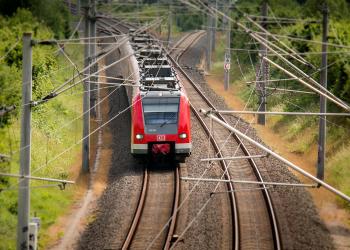
The Transport policy is one of EU's common policies, which contributes to the competitiveness of Europe and its regions by maximising the positive effects of the economic development and welfare. The Transport policy is indispensable part of the European internal market and as such it enables the establishment of freedom of services and the opening of transport markets. The transport of people and goods has reached record levels over the last few decades. Besides the positive economic aspects, social and ecological implications have gradually increased the need for sustainable solutions. In this sense, adequate and properly funded transport networks are crucial elements for the sustainable development of Europe's regions.

The EPP Group supports the active involvement of local and regional authorities in the decision-making process by urban and regional transport planning and mobility in order to meet people's expectation/needs for efficient and modern transport systems.

The Cohesion policy is the EU's main investment policy, which helps to protect existing jobs and create new ones in our regions and cities.
Share

Cohesion

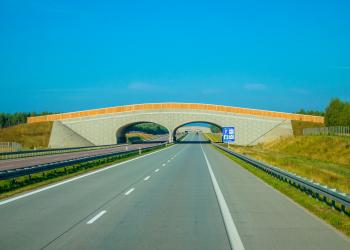
The Cohesion policy is the EU's main investment policy, which helps to protect existing jobs and create new ones in our regions and cities. The Cohesion policy plays a crucial role in achieving the Treaty objective of economic, social and territorial cohesion through reducing disparities between different levels of development of the various regions. In this sense, it is an essential pillar of the European integration process – ensures that weaker Member States, regions and local authorities are also able to benefit from the advantages offered by European integration. However, the Cohesion policy is not simply about evening out regional disparities, but is also a strategy for promoting innovation, competitiveness and sustainable growth both in the less-developed and the stronger regions of Europe and thus improving citizens' quality of life. Almost one third of the total EU Budget for the 2014-2020 programming period - € 351.8 billion – is foreseen for reaching these objectives.

The EPP Group in the European Committee of the Regions has continuously been supportive of a solid and comprehensive Cohesion policy - A strong and effective Cohesion policy is vital for a strong and effective European Union.

We are convinced that the EU's Integrated Maritime Policy should aim at revitalising local communities, increasing the competitiveness of coastal economies.

Share

Maritime

The EPP local and regional authorities are convinced that the EU's Integrated Maritime Policy should aim at revitalising local communities, increasing the competitiveness of coastal economies and ensuring the wellbeing of people. At the same time, it should ensure the sustainable use of the maritime resources, the development of good governance, and an increased awareness of maritime heritage. The EPP-CoR commits to support the development of regional ports, shipping and shipbuilding, regional renewable energy production, fish farming, aquaculture activities, seaports' hinterland connection, coastal and marine tourism as these enable both delocalisation and de-concentration of certain port activities towards smaller centres and would give input for better establishment of communication and transportation links between coastal and inland regions. As a result, it would boost their economic and social development. Moreover, given the demographic and climate challenges, the EPP-CoR commits to the sustainable water management in order to help the EU better cope with situations of flooding, reuse of water, water scarcity, price and quality of drinking water.

We are committed to develop synergies between the agriculture and food, as well as other policies to contribute to the well-being of the citizens.

Share

Agriculture and Food

The European agriculture sector faces a number of challenges due to various reasons including structural ones like climate change, increase of non-food use of agricultural products, globalisation and other factors like economic and financial crisis, embargo on Russia, to name just a few. The EPP local and regional leaders are convinced that in order to ensure high-quality European agriculture in the future we need a more market-oriented Common Agricultural Policy. Any European or national measures, including "ad-hoc" intervention systems or flexible mechanisms for deciding on the temporary raising of intervention prices should not interfere with the functioning of the internal market. Moreover, the EPP-CoR is convinced that the CAP post-2020 should be tailored to farmers' needs, promote innovation and modernisation of small-scale farms which are the backbone of European economy, promote resource efficiency, and stimulate rural entrepreneurship especially among the youth. Furthermore, the EPP-CoR is committed to develop synergies between the agriculture and food, as well as other policies including employment, rural development, environment, health and consumer policy shaping an EU sustainable food systems that foster growth in regions and cities, create new jobs, ensure food security, improve nutrition, and contribute to the well-being of the citizens.