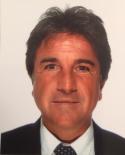
The Commission for Social Policy, Education, Employment, Research and Culture (SEDEC) of the European Committee of the Regions (CoR) held an exchange of views on the future Erasmus+ programme for the period 2028–2034. The rapporteur, Roberto Pella, Mayor of Valdengo and Member of the Italian Chamber of Deputies, presented the foundations of his draft opinion, stressing the essential role of Erasmus+ in shaping Europe’s future and strengthening its territorial dimension.
Pella underlined that Erasmus+ remains “a programme for our young people”, touching on key European priorities such as regional cohesion, student mobility, skills development, and the digital and green transitions. He recalled with pride that the original idea behind Erasmus+ came from Italian academic Sofia Corradi, who passed away on 17 October this year.
“Erasmus+ has become a fundamental instrument for the development of our territories and for supporting the skills our young people need in areas such as digital technologies, the green economy, artificial intelligence, sport and new forms of partnership,” Pella said. He highlighted that the programme does not only support education, but also contributes to tackling demographic challenges, including depopulation in rural areas and excessive urbanisation in major cities.
The rapporteur strongly defended the need for continued support to the Centres of Vocational Excellence, which showcase the strengths of each European region. He stressed that promoting territorial identities requires investment in high-quality vocational training, improved accessibility of EU programmes and a strong focus on inclusion. “Erasmus+ must remain accessible to all – financially, psychologically, and socially. Inclusion is essential, and if you allow me, colleagues, it is also a condition for peace.”
Pella also connected the programme’s values with upcoming international events, noting that Italy will soon host the Winter Olympics. He recalled Italy’s message at the United Nations that the Olympic Games are an instrument of peace, reaffirming that Erasmus+ likewise contributes to peaceful coexistence by promoting mobility, dialogue, and understanding among young Europeans.
As part of the broader reflection, Pella stressed the urgency of increasing democratic participation among younger generations. “New generations are becoming less and less interested in politics. With this opinion, we are discussing the future of Europe and of our young people, and therefore we must set clear, robust rules,” he stated. He called on the European Parliament and the European Commission to strengthen structured cooperation with local and regional authorities, without which “these projects will not become reality, even though they are essential for growth.”
Reacting to today’s Council discussion Pella said “We welcome the discussion that has already taken place in the Council on Erasmus+, which is at the centre of our present commitment in the CoR SEDEC Commission. The Programme should be designed to give greater attention to the specificities of European territories, such as inner areas, as well as cities and regions with demographic challenges linked to depopulation on the one hand and urbanisation on the other. Alongside investments, it is important to increase flexibility and simplification in order to improve the Programme’s accessibility for smaller stakeholders.”
The final opinion on the Erasmus+ 2028–2034 programme will be presented for adoption at a forthcoming SEDEC meeting before being submitted to the CoR plenary.