During a debate with European Commissioner for Budget, Anti-Fraud and Public Administration Piotr Serafin at the European Committee of the Regions (CoR) plenary session, members of the EPP Group in the CoR (EPP-CoR) stressed that the next Multiannual Financial Framework (MFF) after 2027 must respond to new economic challenges and priorities while safeguarding the EU’s core policies and ensuring that regions and cities remain central to the implementation of European policies.
The debate focused on the future structure of the EU’s long-term budget, including the Commission’s upcoming proposals and the need to ensure that new priorities—such as security, defence and competitiveness—are developed alongside strong territorial cohesion, agricultural policy and support for Europe’s regions and cities.
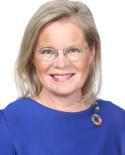
The CoR plenary unanimously adopted the opinion on the post-2027 MFF drafted by Rapporteur Sari Rautio (FI/EPP). Presenting her opinion, Rautio said: "The Commission’s new objectives—security, competitiveness, defence, sustainable sovereignty, and a stronger Europe—will succeed only if we build them together. That also requires resources. We strongly encourage an agreement on a new package of EU own resources that is acceptable to all and that advances our shared ambitions. Europe’s future depends on trust in our democracy and on cooperation between institutions and territories."
Rautio, who serves as President of the EPP-CoR, added: “Regional ‘checks’ must be part of how we assess whether multi-level governance and the partnership principle are actually being implemented. That cannot remain optional or informal—it must be written into the relevant regulation. We need binding legislation, and we propose a new subsidiarity clause to ensure this question is properly taken into account in practice. If everything is connected at local level—where policies meet people—then it makes no sense to assemble legislative packages while leaving regions and municipalities outside the room. Europe works best when all levels are part of the solution."
Commissioner Piotr Serafin underlined that the future EU budget must reflect changing geopolitical and economic realities. At the same time, Serafin stressed that traditional EU policies would remain central to the budget architecture. “Cohesion policy and the Common Agricultural Policy will remain stable in nominal budgetary terms. Cohesion policy should continue to support all regions while also contributing to competitiveness and addressing new challenges.”
During the debate, EPP-CoR members highlighted the importance of maintaining cohesion policy as a cornerstone of the European project and ensuring that regions continue to play a central role in the management and implementation of EU funds.
Juanma Moreno, President of Andalusia (ES/EPP), stressed that protecting cohesion policy is about defending the core principles of the European Union. “Defending cohesion policy is not a selfish objective of individual regions, but rather a defence of the fundamental principles of the EU, particularly equality and territorial balance.” He also stressed the importance of agriculture and food sovereignty in a context of global uncertainty, calling for a strong and modern Common Agricultural Policy.
Tanya Hristova, Mayor of Gabrovo (BG/EPP), warned that sidelining regions would weaken the democratic foundations of cohesion policy. “We risk losing what has made cohesion policy the most democratic, participatory and place-based policy. When regions and cities are sidelined, implementation becomes weaker.”
Thomas Schmidt, Member of the Saxon State Parliament (DE/EPP), emphasised that regional authorities must have real influence over how EU funds are used. “Regions must have decisive influence over how funds are used in the future. The announced regional right of review must be real—not symbolic—so that regional authorities can shape priorities and ensure money reaches needs on the ground.” He also warned that trust between institutions and regions is essential for the future of the European project. “If people no longer see cohesion policy as a shared European investment, support for the European project will erode.”
Alfonso Rueda, President of Galicia (ES/EPP), stressed that cohesion policy funds must remain sufficient and should not be fully centralised at national level, highlighting the important role that regions and local authorities play in implementing EU programmes. He also called for a strong Common Agricultural Policy, fewer administrative burdens for farmers and a dedicated framework to support the fisheries sector, warning about growing competitive pressures from third countries.
Hannah Zdanowska, Mayor of Łódź (PL/EPP), emphasised that local governments need decentralisation and adequate EU support to strengthen Europe’s resilience and ability to respond to crises, particularly in regions facing external threats.
Celia Alberto, Director General for European Affairs, Government of the Canary Islands (ES/EPP), criticised the European Commission’s proposals for the next MFF, warning that excessive centralisation could weaken the role of regions and fail to reflect their specific needs and the specificities of territories such as the EU’s outermost regions.
Emil Boc, Mayor of Cluj-Napoca (RO/EPP), proposed that future national plans should include a dedicated territorial chapter. “To keep the voice of regions and cities alive after 2027, every national plan should include at least one dedicated territorial chapter. That is not bureaucracy—it is accountability.”
Huguette Zeller, Regional Councillor of the Region of Grand Est (FR/EPP), also warned against recentralising EU funds and stressed that agriculture must be protected as a strategic pillar of Europe’s sovereignty.
Background
The CoR opinion on the post-2027 Multiannual Financial Framework, drafted by Rapporteur Sari Rautio (FI/EPP), was adopted unanimously by the CoR plenary.
Key points from the rapporteur’s amendments include:
• Support for vulnerable territories: Particular attention should be paid to rural areas, regions undergoing industrial transition, and territories facing severe and permanent natural or demographic challenges, including sparsely populated northern regions, islands, cross-border and mountain regions, as well as the EU’s outermost regions in line with Article 349 TFEU.
• Strengthening multi-level governance: The opinion calls for the systematic use of multi-level governance assessments throughout the entire policy cycle of MFF programmes to ensure that strategies developed at regional and local level are reflected in EU priorities and implementation.
• Regional checks and subsidiarity: The CoR proposes that regional checks be included in relevant regulations as part of the assessment of the partnership principle and multi-level governance, together with a new subsidiarity clause to ensure these principles are respected in practice.
• Support for European Territorial Cooperation: The opinion stresses the importance of European Territorial Cooperation (Interreg) and welcomes proposals for dedicated funding and simplification measures to strengthen cross-border, transnational and interregional cooperation, including investments in innovation and joint solutions to regional challenges.