The Commission for the Environment, Climate Change and Energy (ENVE) of the European Committee of the Regions (CoR) today adopted the draft opinion “Turning the Tide – A Local and Regional Roadmap for Water Resilience.” The opinion calls for strengthened local and regional action to address growing water scarcity, climate-related pressures and the need for long-term water resilience across Europe.
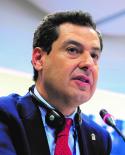
In his reaction, Juanma MORENO, Co-Rapporteur, President of the Regional Government of Andalusia, and First Vice-President of the European Committee of the Regions, stated: “Water is not only a vital resource for ecosystems; it is also a key driver of regional and local development. This is essential to achieving the objectives of cohesion policy. The situation is particularly critical in vulnerable regions such as Andalusia, where agricultural and industrial activity is threatened by water scarcity, all of which is exacerbated by the pressure of climate change. These scarcity issues could be addressed by improving water-use efficiency and increasing water resources in a sustainable manner. We face problems of scarcity, but we also have alternatives to mitigate them. The opinion we have adopted today in the ENVE Commission, of which I have the honour of being rapporteur together with the President of the CoR, Kata Tüttő, seeks to respond to the numerous challenges we face and to place local authorities and regions at the heart of the discussion.”
José Enrique MILLO ROCHER, Secretary General for External Action, European Union and Cooperation of the Regional Government of Andalusia, stressed the need for coherent, region-specific policies to address the diverse water-related impacts of climate change: “In the case of Andalusia, we adopted various measures because we understand that water cannot be a limit to the region’s development. Since 2019, we have invested around €2 billion in preventive actions—both in improving existing infrastructure and in creating new ones. We are also about to approve Andalusia’s First Strategy on Non-Conventional Water Resources, that is, regenerated water and desalinated water. The aim is to promote their production and use for the benefit of citizens, for all productive sectors affected by water scarcity, and for our natural heritage. But we need more resources, and we ask for decision-making capacity, since regions have the experience and know our territories. This is the right moment to raise our voice and call for more autonomy, co-governance and cohesion policy, in the context of the MFF negotiations that you are familiar with, which should not result in the loss of a single euro allocated to water policies.”
Csaba BORBOLY, Vice-President of Harghita County Council, welcomed the opinion’s recognition of the European significance of mountain water resilience: “I request that the protection of mountain waters and nature-based solutions be highlighted as distinct, visible priorities in EU decision-making. Due to the Carpathians’ role as a ‘water tower,’ targeted mountain water resilience policies are needed, supported by strong EU, national and local partnerships. The proposals include local water management committees, trans-Carpathian cooperation and nature-based solutions such as beaver dams, wetland restoration and water-retentive forest management. In addition, an integrated hydrometeorological monitoring network, open data, drought and flood alerts, as well as educational and youth programmes, would help strengthen community knowledge and engage young people in local climate and water protection measures.”
Mirjam STERK, Regional Minister of the Province of Utrecht, underlined the need for a European approach to water pollution: “Clean water is a basic need for our citizens, and in the Netherlands, regions and local authorities share responsibility for providing it. However, the high cost of treating polluted drinking water makes our regions vulnerable. That is why I am particularly pleased to see that the rapporteurs have taken on board our suggestion for an at-source approach. We need action with a clear European dimension. The Netherlands is the longest delta region in Europe: we are literally at the end of all river flows. Pollution that occurs elsewhere in Europe often ends up in our regions. One of the most worrying examples of pollution is PFAS and other so-called ‘forever chemicals.’ These substances are among the most difficult to remove from our water systems. I am glad that you have included our call for the restriction of PFAS to the fullest extent possible, and that this should be put forward without delay.”
Key Elements of the Draft Opinion
The opinion stresses that flexible and locally adapted approaches—including hydrological planning, drought and flood risk management plans, integrated resource management, differentiated water pricing, and decentralised water reuse systems—are essential for effective implementation of the EU Water Resilience Strategy.
It also proposes the creation of a European Platform on Water Resilience, jointly managed by the European Commission, the European Committee of the Regions, and the European Economic and Social Committee. This platform would:
• monitor implementation of the Strategy,
• enable evidence-based updates,
• facilitate the exchange of good practices, and
• prepare a biennial Water Resilience Forum.
Next Steps
Work on the opinion will continue ahead of its final adoption at the CoR plenary session in March 2026.