Local and regional leaders are urging the European Union to strengthen support for water resilience in response to growing pressure on water resources across Europe. Droughts, floods and declining water quality are increasingly affecting communities, economies and ecosystems, making water management a strategic priority for the EU. In its opinion on the European Water Resilience Strategy adopted at the plenary session on 4 March, the European Committee of the Regions (CoR) stresses that cities and regions must be at the heart of planning, investment and implementation to ensure effective solutions tailored to territorial realities.
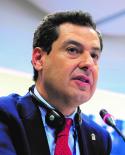
Juanma Moreno, President of Andalusia and co-rapporteur of the opinion, said: "There are no one-size-fits-all solutions. We need approaches tailored to territories, with cities and regions at the heart of governance, applying integrated approaches in which we cannot forgot the best available technology, from nature-based solutions to conventional solutions where necessary, and managing in an integrated manner all water resources—regulated, reclaimed and desalinated—to reduce pressure on ecosystems and enable their recovery without jeopardising socio-economic activities. Turning the tide means investing more and better, deciding closer to the territory, and committing to the smart and sustainable use of water to facilitate the socio-economic development of each territory and protect citizens, leaving no one behind."
Local and regional leaders highlighted that the impacts of water scarcity and extreme weather are already visible in many parts of Europe. Jan Zámečník, Member of the Regional Assembly of the South Moravian Region (Czech Republic), said: "Water in our region is no longer just an environmental issue. It has become a matter of security. A matter of economic stability. A matter of agricultural production. And a matter of the quality of life for our citizens." In this regard, Zámečník called for stronger support for regions facing increasing water stress and emphasised that regional authorities are on the front line of adapting to drought and extreme weather events.
Francienne Muscat City Councillor of Ix-Xagħra (Malta), said: "Water security is not an abstract concept for islands like Malta and Gozo, it is a matter of survival." Muscat stressed the need to strengthen rainwater collection, water storage and reuse, highlighting that for island territories with extremely limited freshwater resources, resilient infrastructure and reliable supply are essential for communities and local food production
Jessica Roswall, European Commissioner for Environment, Water Resilience and a Competitive Circular Economy, emphasised the importance of cooperation between European institutions and local authorities: "Water is the very foundation of our economic and environmental security. It is clear that water challenges are felt first and most severely at a local level. That means solutions must be shaped locally, and this is why the European Committee of the Regions has such a vital role. The European Water Resilience Strategy is our collective answer and together we can turn ambition into action and deliver real water resilience."
The opinion calls for stronger integration of water resilience across EU policies and highlights several key priorities:
• Ensuring that cities and regions are fully involved in decision-making on water planning and management, including in cross-border river basins.
• Introducing a “Water Test” for EU legislation to ensure that all policies consider their impact on water resources.
• Providing dedicated funding for water resilience in the next EU multiannual financial framework, including through cohesion policy and other EU instruments.
• Developing regionally disaggregated water-stress indicators and climate vulnerability maps to support targeted action adapted to different territorial realities.
• Promoting water efficiency, savings and reuse, including through the application of the “water efficiency first” principle.
• Strengthening pollution control and monitoring across the entire water cycle, including action on PFAS and the application of the polluter pays principle.
Local and regional leaders also stressed that reducing pressure on water resources requires a systemic approach linking climate adaptation, agriculture, infrastructure, innovation and ecosystem protection. By combining territorial knowledge with European support and investment, regions and cities aim to translate the Water Resilience Strategy into practical solutions that protect citizens, strengthen economies and safeguard Europe’s natural resources.