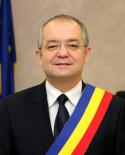
"Cohesion policy is not for sale” were the opening remarks of Rapporteur Emil Boc (RO/EPP), Mayor of Cluj-Napoca warning against the excessive centralisation risks in the European Commission’s proposal for the new National and Regional Partnership Plan (NRPP) Fund for 2028–2034 as part of the Multiannual Financial Framework (MFF) 2028-2034.
Emil Boc (RO/EPP), Mayor of Cluj-Napoca, and co-rapporteur Vasco Alves Cordeiro (PT/PES), led an exchange of views with representatives of the European Commission and the Danish Council Presidency on the proposed single fund and rulebook that would bring together cohesion policy, the CAP, rural development, fisheries and HOME funds under one architecture.
Presenting his first reactions as rapporteur, Emil Boc underlined the historic stakes around the future of cohesion policy within the new MFF architecture: “We all know the phrase: elections have consequences. Our choices about the future of cohesion policy will also have consequences – historic consequences, even existential ones. From my perspective – from our perspective – cohesion policy is not for sale. Cohesion policy is here to stay.”
He warned that, in its current form, the NRPP proposal would fundamentally alter the nature of cohesion policy: “If this proposal is adopted as it stands, we risk having less Europe – or even no Europe at all – by 2034. Centralisation destroys unity, centralisation kills competitiveness, centralisation breaks Europe. Without territorial correction, the single market would have been unsustainable. And if cohesion fails, the single market itself is at risk.”
Boc stressed that cohesion must remain territorial, decentralised, place-based and multi-level, exactly as designed by the founders of the European project, and called for cohesion policy to remain a strong pillar of the Multiannual Financial Framework, with its budget strengthened rather than reduced.
Cohesion for all regions – not a charity policy
Several speakers warned that the proposal risks undermining the principle of “cohesion policy for all regions”.
Boc highlighted the concrete impact of the current text: “Regions in Denmark, Germany, Estonia, Ireland, Cyprus, Luxembourg, Malta, the Netherlands, Austria, Finland and Sweden will no longer receive guaranteed funding under cohesion policy. This is a fact, not a story. If we claim to have cohesion policy for all regions, then we must truly have it for all regions – not just for less developed regions.”
Rafał Trzaskowski (PL/EPP), Mayor of Warsaw, warned that reducing cohesion to a tool only for the poorest regions would fundamentally change its philosophy: “When we were negotiating EU accession, we repeatedly heard the argument that cohesion policy should be limited only to those ‘most in need’. That is a recipe for destroying cohesion. It turns cohesion into a charity instrument, easy to cut in every future MFF negotiation. Either we treat cohesion policy as one of the cornerstones of European integration, helping people in need wherever they live, or we reduce it to a narrow charity scheme. That is the real risk in the current proposal.”
Partnership, place-based approach and governance
Ivan Žagar (SI/EPP), Mayor of Slovenska Bistrica, underlined the need to protect distinct cohesion and CAP budgets and to resist renationalisation: “The new proposal would bring major changes to the very core of cohesion policy and its main principles. We strongly oppose any reduction in cohesion policy funding compared to the current period, and we also oppose cuts to the CAP. There is a real risk of cohesion policy becoming renationalised. The partnership principle must be truly operationalised, and there must be consequences when this principle is not respected.”
He warned that without genuine regional involvement, supposed “partnerships” risk remaining purely national: “We often speak about national and regional partnerships, but we need guarantees that these partnerships are genuine and that they really include the regional level in preparing key documents. Decentralisation must also mean decentralisation to the regional and local level.”
On behalf of the Czech CoR delegation, Radim Sršeň (CZ/EPP), Mayor of Dolní Studénky, called for the territorial and place-based approach to be firmly anchored in the NRPP Fund Regulation: “The Czech delegation explicitly calls for the territorial and place-based approach to be enshrined as a horizontal principle, applicable across all NRPP chapters and all fund interventions. We need stronger integrated territorial approaches and a minimum allocation for ITI and CLLD to ensure sustainable urban and rural development.”
He also stressed the importance of governance and technical assistance: “We insist on balanced representation in monitoring committees, with local and regional authorities having equal or higher representation than managing authorities. We also need a fair distribution of technical assistance, including targeted support for local and regional administrative capacity, and we are worried about the 25% flexibility ring-fencing being misused. A substantial share must be reserved for regional responses to territorial shocks such as natural disasters or major industrial closures.”
Less bureaucracy - Mayors demand clarity
Georgios Papanikolaou (EL/EPP), Mayor of Glyfada, focused on the practical consequences of the new architecture: “Every time we discuss a new MFF, or previously the RRF, we face the same problem: bureaucracy. We try to make programmes more user-friendly so cities and regions can access funds more easily, yet procedures remain very heavy. Do you really believe that this new architecture with pillars will lead to less bureaucracy?”
He drew a direct parallel with the RRF experience: “Even though the RRF was created in a time of crisis, with the intention of being very fast and user-friendly, in practice we encountered many problems of accountability and implementation. So my second question is: under this new proposal, do you genuinely believe we will achieve better and faster disbursement of funds? These are specific questions, and we need equally specific answers.”
“One size does not fit all”: place-based cohesion and long-term support
Åsa Ågren Wikström (SE/EPP), Regional Councillor of the Region of Västerbotten, underlined that the EU budget must match the political priorities on cohesion and territorial development: “It is important that the budget reflects our core priorities on cohesion, so that we do not lose sight of what really matters to us. When we speak about cohesion, we must ensure that resources reach local and regional governments and their communities. We need local ownership so that investments make a real difference at local and regional level and respond to people’s needs.”
She stressed the need for predictable funding and a place-based approach: “Local and regional authorities must be involved in shaping the regulations, and they must have access to clear, predictable funding for all types of regions, including earmarked support for disadvantaged areas. A place-based approach must remain central, because one size does not fit all – and I believe that is a point many of us strongly share.”