The Commission for Territorial Cohesion Policy and the EU Budget (COTER) of the European Committee of the Regions today adopted its opinion on the proposed Regulation for the National and Regional Partnership Plans (NRPP) Fund.
In the opinion, local and regional leaders strongly underlined the need to safeguard the core principles that make EU Cohesion Policy effective through the meaningful involvement of subnational authorities. These include shared management, the partnership principle and multi-level governance. To this end, COTER members called for the introduction of a “subsidiarity clause”, empowering regions to request the European Commission to reject NRPP plans that are overly centralised or excessively nationalised.
COTER members also opposed the idea of transforming the NRPP into a single, undifferentiated “pot of money” at the disposal of Member States. Instead, they stressed the importance of maintaining references to distinct funds — such as the European Regional Development Fund (ERDF) and the Cohesion Fund — each with its own objectives, rules and added value, and each benefiting from clearly earmarked financial allocations.
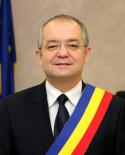
Emil Boc, Mayor of Cluj-Napoca and Co-Rapporteur of the European Committee of the Regions on the NRPP Fund, stated: “This is not only about the future of cohesion policy; it is about the future of the European Union itself. Our objective is clear: to secure a strong cohesion policy with a strong role for regions and cities. If we achieve that, we have a future — because cohesion policy remains the most important glue holding Europe together. We have moved from declarations to concrete legal substance. For the first time, an EU institution is proposing a clear and operational understanding of active subsidiarity, multi-level governance and the institutional role of the European Committee of the Regions, including through a concrete approach to regional checks. We also put forward a vision of cohesion policy for all regions. Every Member State should include at least one territorial chapter in its plan, ensuring support for territorial development and place-based solutions. We further support a minimum target of 20% of national allocations for integrated territorial development strategies, in line with our broader priorities, including agriculture and rural development.”
Ivan Žagar, Mayor of the Municipality of Slovenska Bistrica and EPP-CoR Coordinator in the COTER Commission, emphasised the need for genuine partnerships: “We must stress the important role of regions — this is our guiding principle. We do not want a formal or illusory partnership where, in the end, decisions are taken without our real involvement. What is written in this opinion must be implemented on the ground. I would also like to highlight the letter from the European Community of Regional Partnerships, which merits careful consideration and a response from our side.”
Celia Alberto Perez, Director General for European Affairs, Government of the Canary Islands warned about the potential impact of the proposed framework: “These proposals will have a major impact on the outermost regions. We understand the need to align with new EU priorities and to strengthen competitiveness, but we have serious concerns that this approach risks backtracking on the recognition of our specificities. Article 349 of the Treaty is clear: outermost regions have a special status that justifies specific measures and dedicated support. Leaving decisions largely to Member States, without European-level guarantees, creates a real risk of losing essential support. This is not about privileges — it is about social justice. Our realities are different, and ignoring them would increase vulnerabilities, particularly in agriculture, fisheries and food sovereignty.”
Sari Rautio, President of the EPP Group in the European Committee of the Regions and Co-Rapporteur on the next Multiannual Financial Framework (MFF), highlighted the importance of regional checks: “Regional checks are an essential element of future EU policymaking. We must ensure that this principle is consistently reflected across all opinions and legislative processes.”
Radim Sršen, Mayor of Dolní Studénky welcomed the progress made but called for further clarity: “I welcome the clarification of the wording on regional checks and multi-level governance. The European Committee of the Regions should be the institution that delivers a clear and concrete definition of what a regional check actually means.”
The opinion stresses the need for a place-based, multi-level approach that strengthens — rather than replaces — the foundations of cohesion policy. It calls for the “do no harm to cohesion” principle to be placed at the top of the hierarchy of objectives of the NRPP Fund.
Furthermore, the opinion advocates for a minimum target of 20% of national allocations to be dedicated to integrated territorial development strategies, including Integrated Territorial Investments, Community-Led Local Development, LEADER and other territorial tools designed by Member States.
Next steps: The opinion is scheduled for adoption by the European Committee of the Regions at its May plenary session.